To Live a Loving Life

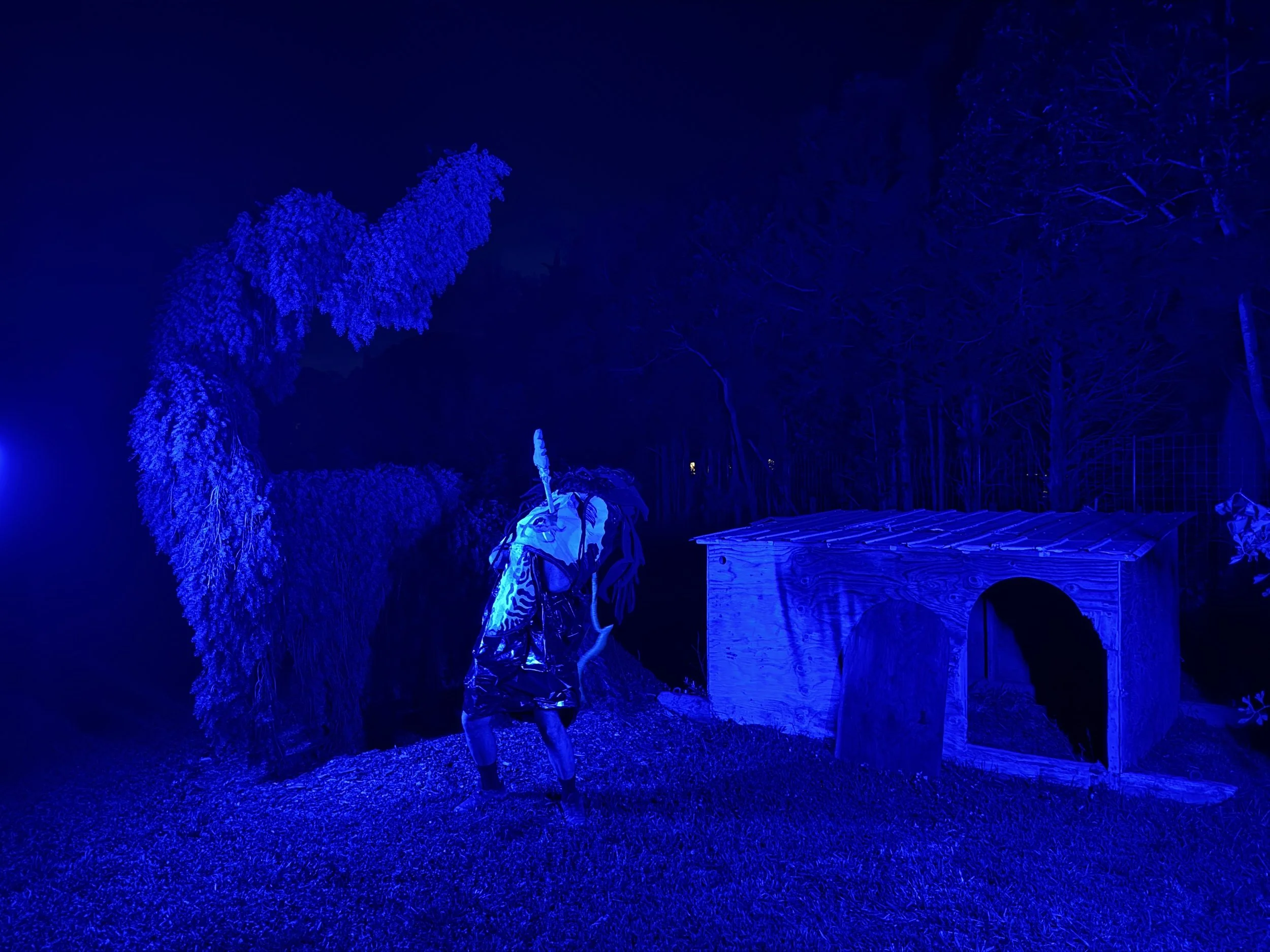
To Live a Loving Life is a work of interactive performance that changes form depending on its context, location, and audience size. It is the third and most fully realized incarnation of Azguyeinqainaen! to date, after Fool’s Window and Return to FOREVERHOUSE. The first incarnation of To Live a Loving Life was staged at Folly Tree Arboretum in East Hampton, New York, to audiences of 25 people at a time. The unique nature of the Folly Tree incarnation, a phantasmagorical twilight tour of the arboretum grounds with interactive theater vignettes, resulted in what would come to be known as Module 1: Twilight Drover Family Theater.
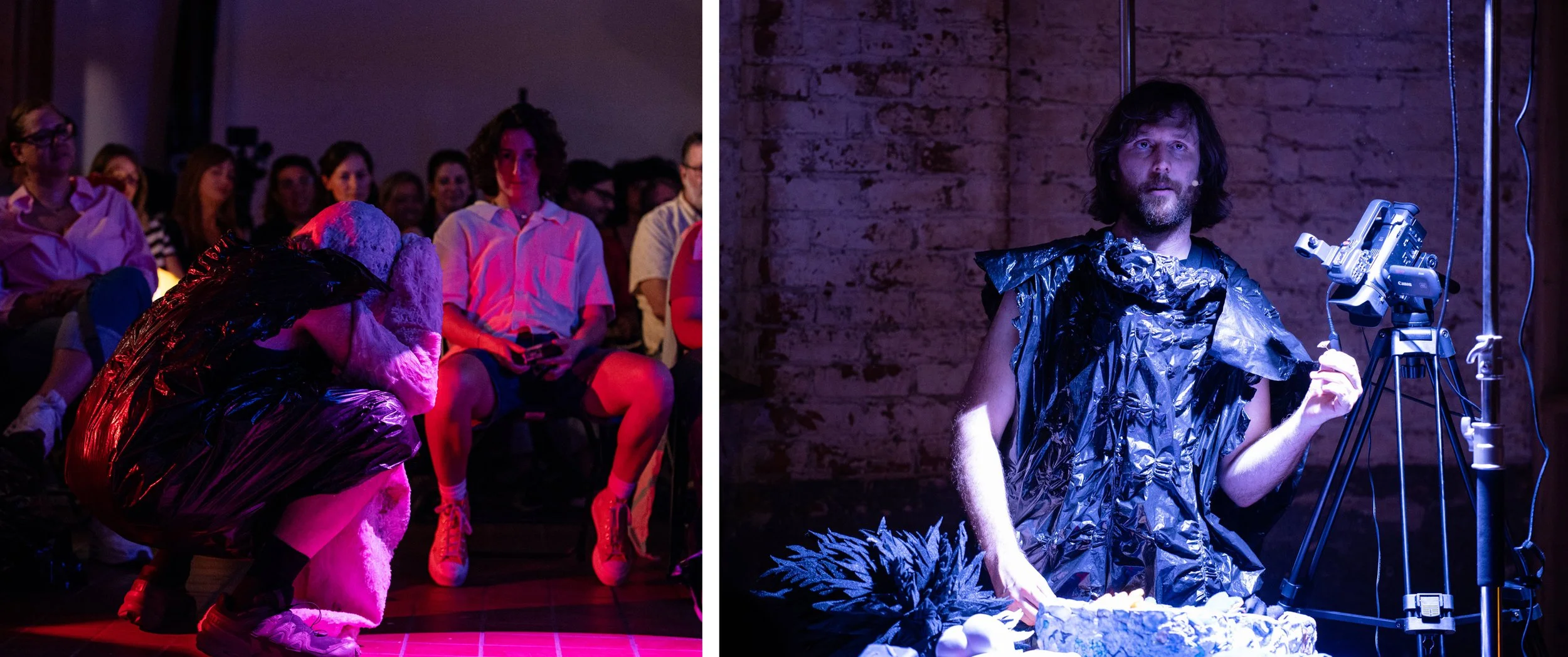
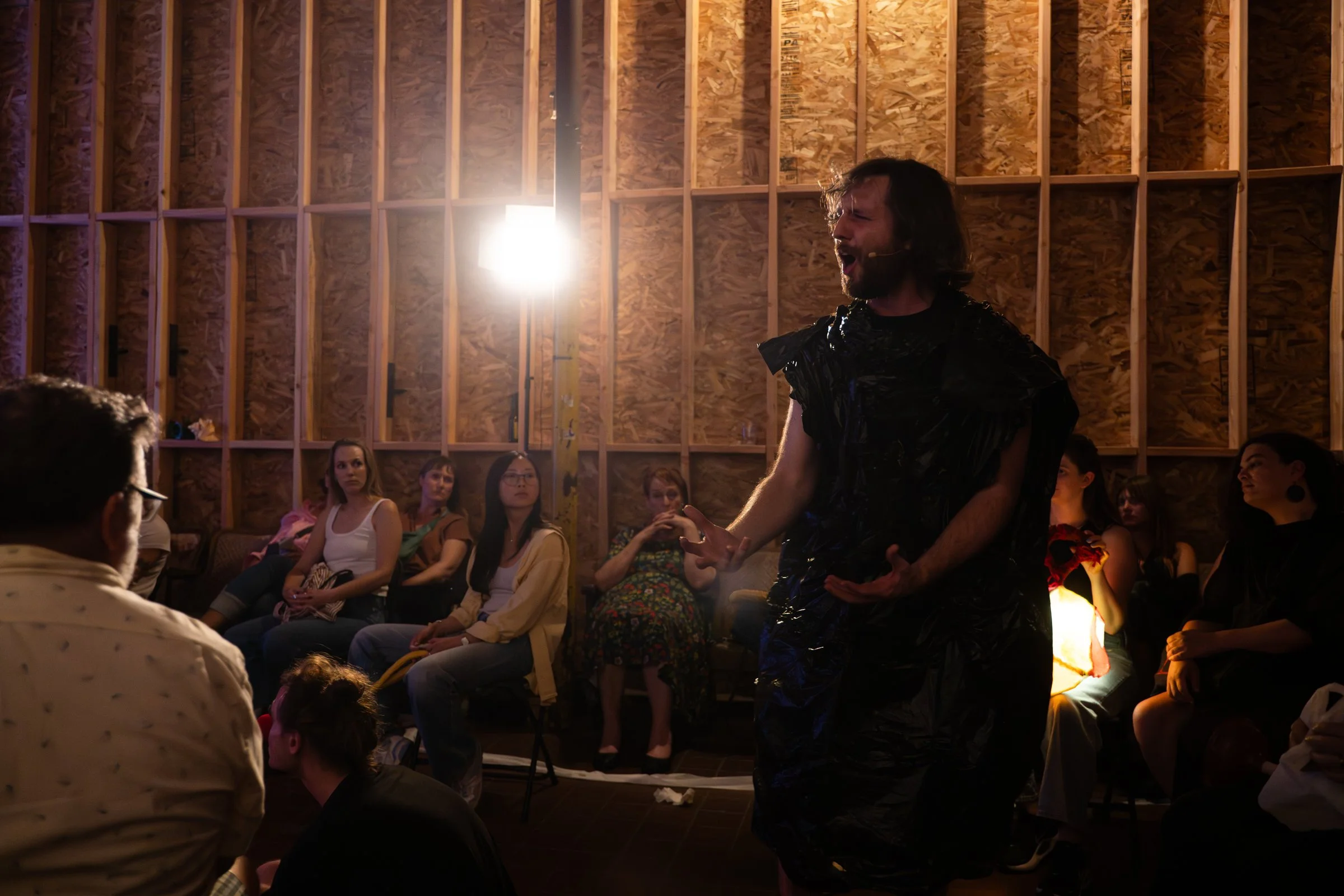
The second incarnation of the work, at Bread and Salt in San Diego on March 20th, 2026 was a part of Project Blank’s Salty Series. This offering of the piece was set indoors for an audience of 75 people, so a new module needed to be developed. This new incarnation of the work is titled Module 2: I Am the Weather, and brought in co-conspirators Marguerite Brown, Harper Ferry, mattie brice, and Alan S. Tofighi to play through a situational score as a means of invoking peripheral performances. a kind of indoor “weather engine”.
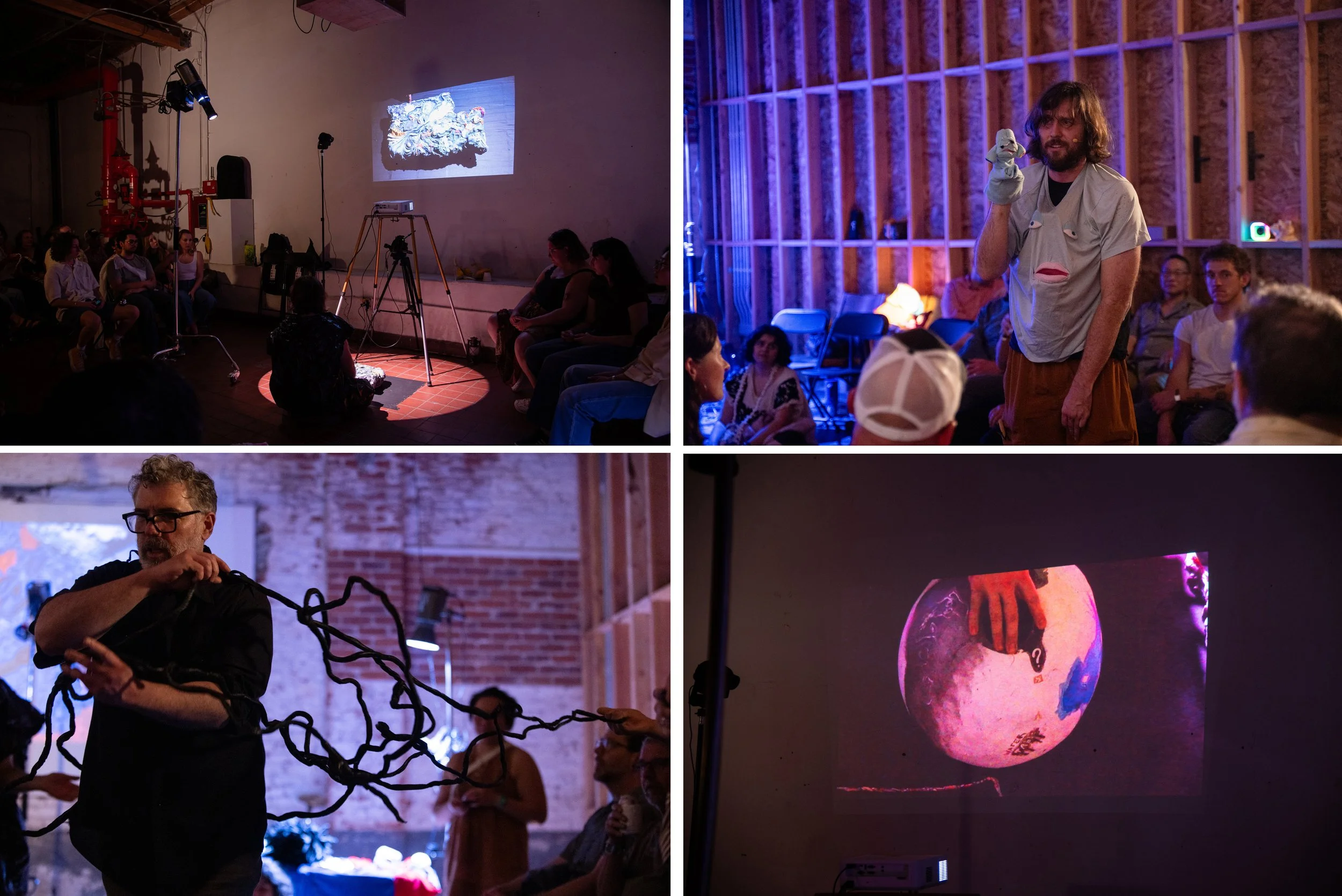
The third, and most recent incarnation of the work was run as a smaller and more intimate scale performance for solo players or small groups. It was first staged as a part of the exhibit. Rules Are Not Neutral: Play as Sense-Making, Acts of Resistance, and Imagining Otherwise. This smaller scale version of the work allowed one of the more complex Azguyaenquainan! objects to take central microcosmic stage as the guiding force, and is titled Module 3: The Painter’s Box. The photographic documentation of the work on this page flows in chronological order.
The core of To Live a Loving Life is a magical realist reflection on the aspects of “Self” that I often try hardest to conceal. Throughout the work, shadows emerge as fogbroods, tiny bastards, idiot mystics, and cosmic voices. Regardless of whether it is happening in a living room or an arboretum, it is a journey with many guides, the most significant of all being the choices of the Audience and the contributions to the work by the people that care most about me.
Along with musical tracks that I created for the work, the music of those closest to me guide me and the audience through the psychonautical landscape. Throughout this page are some samples of the OST created by my mother (Mother Song), father (Father Song), and my partner, Marguerite Brown (Wandering Ocarina Suite), as well as significant friends and collaborator, Elizabeth Szprejda (Tongue Depressor)
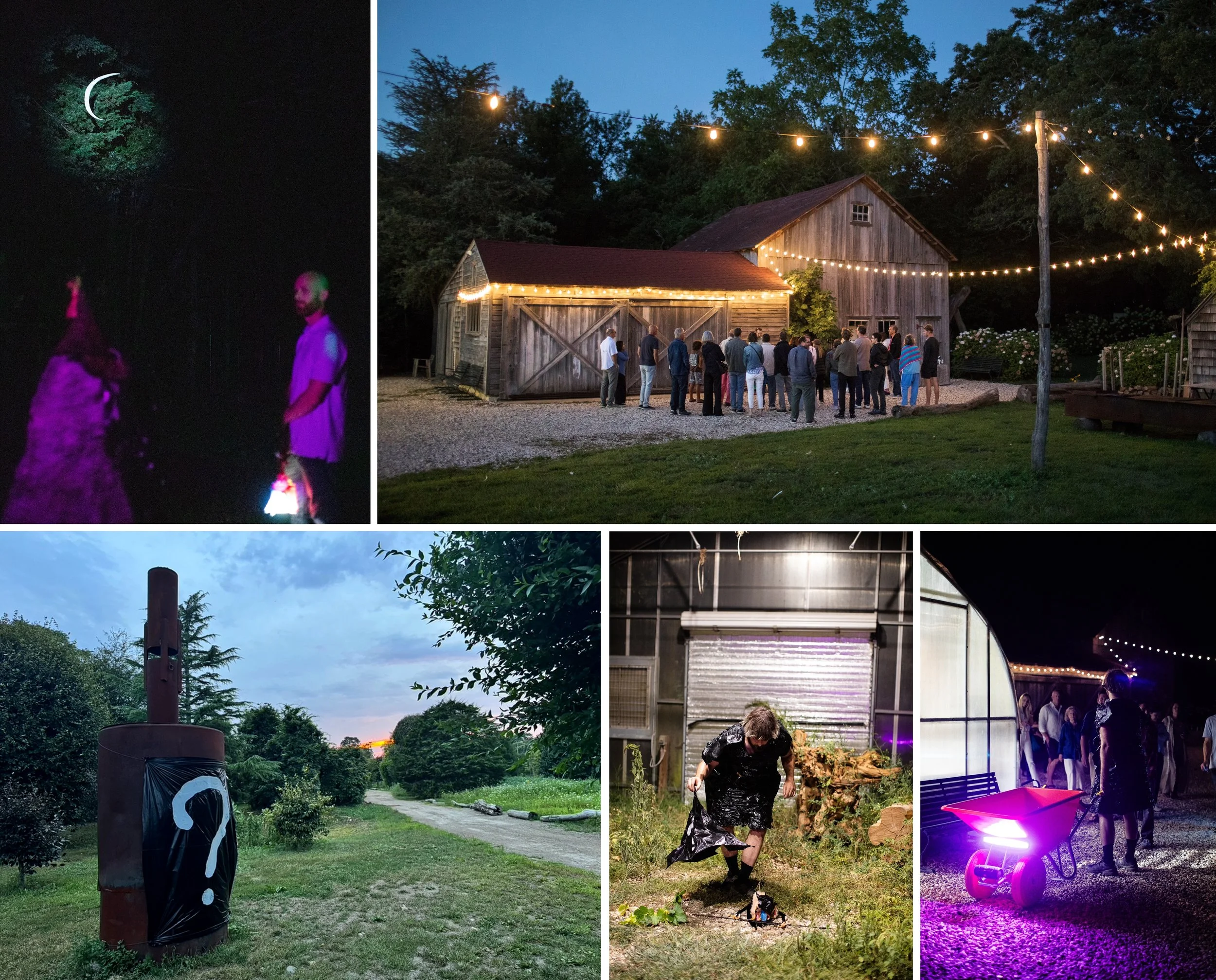
Prior to the audience being guided through the Folly Tree Arboretum, they were brought into the barn to be “born into the world of the work”. They would live an entire life within the world, and then “die” at the end, taken on The Long Walk to the Final Table to account for all of the choices that were made along the way. Depending on actions taken throughout, how the audience members interacted with different characters, it would change the nature of what could be revealed at The Final Table. Throughout the evening, audience members could respond to myself, various characters that we met along the way, and also to “mysteries” planted throughout the arboretum. They were equipped with toold along the way as oparticular audience members were invited to take on roles like “Bell Ringer”, “Light Warden”, and “Bard”, each of which had their own set of tools for interacting.
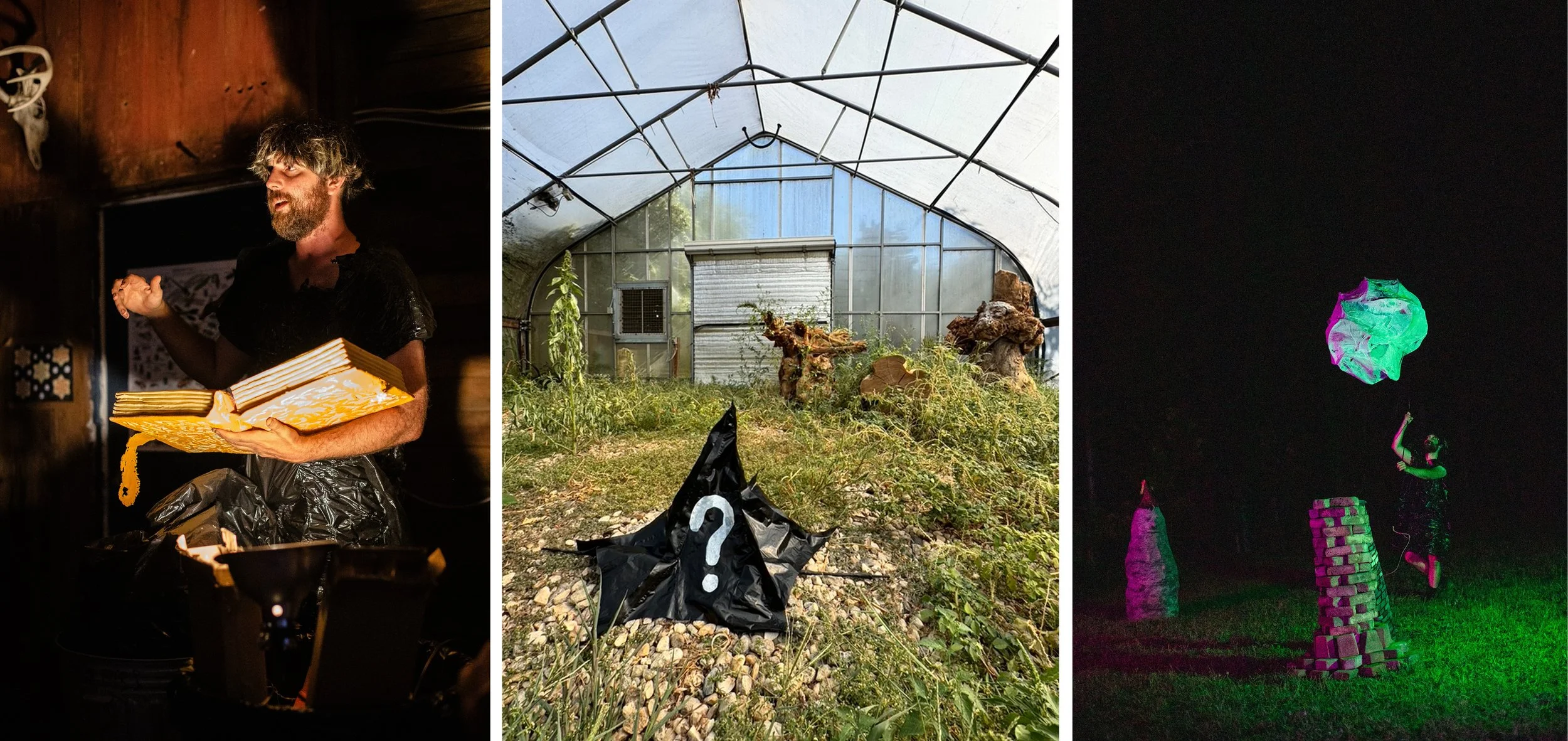
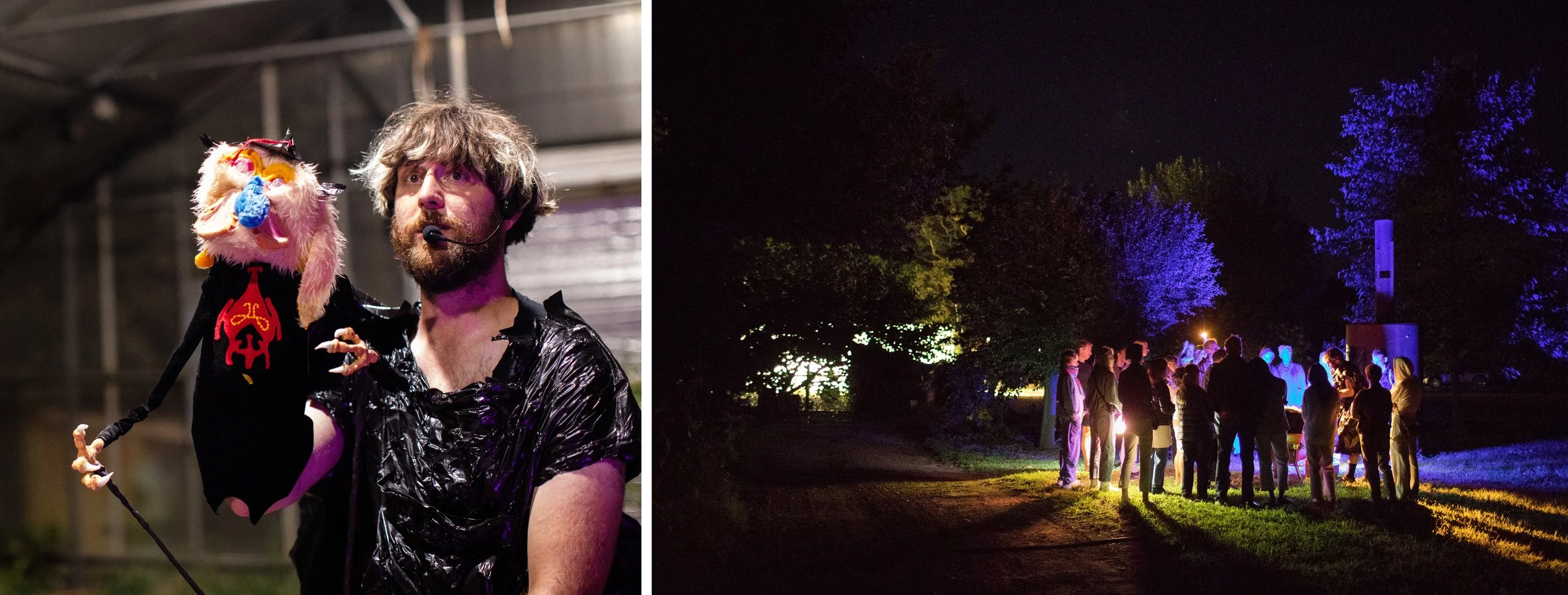
Various interactive, performative, and parlor-game vignettes were hidden within the landscape. Only if audience members activated the event through their actions would they get to uncover and engage with the characters, games, and narrative beats embedded within them.
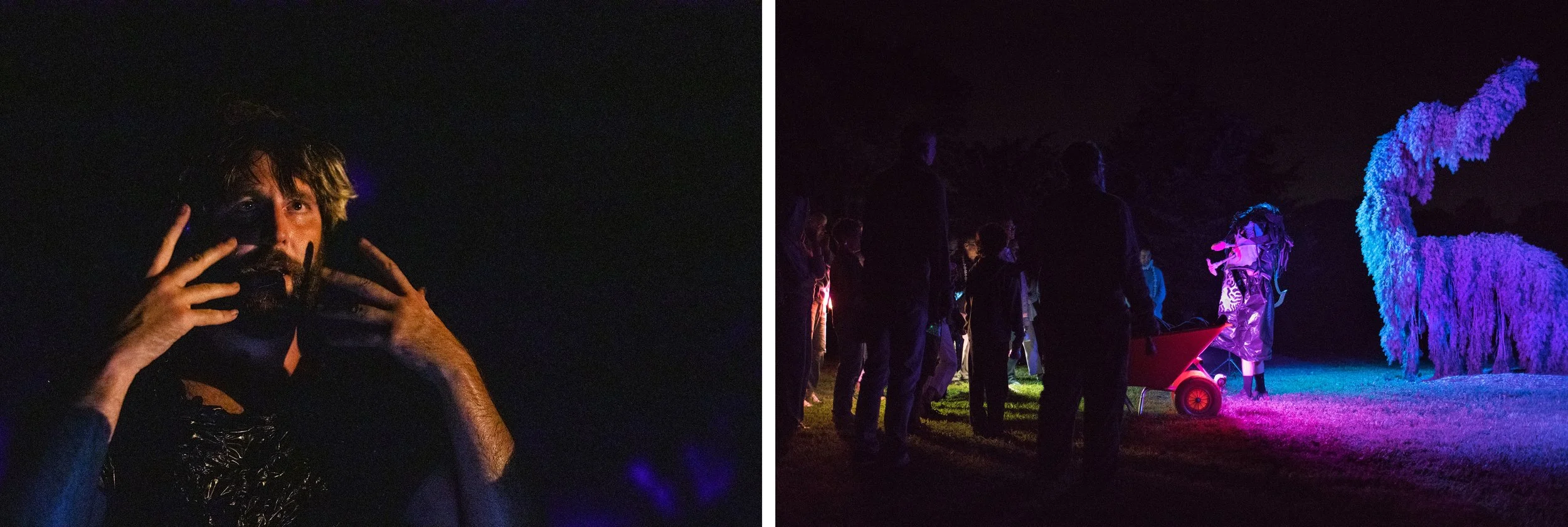
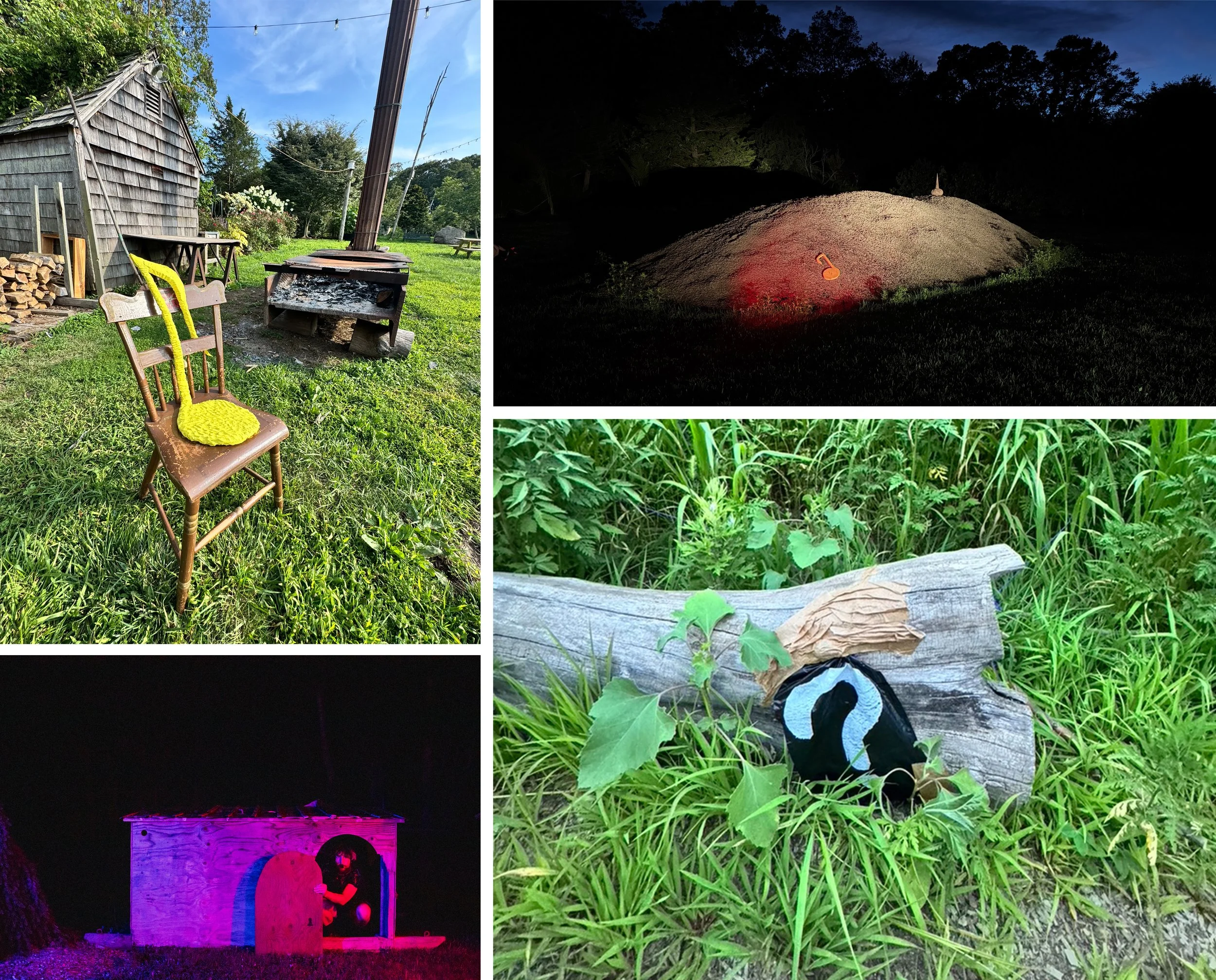
Throughout, staged vignettes lay in waiting: costumes, puppets, sculptural items to be carried forth like keys to the many doors along the way. Characters that emerge based on the audience choices allow me to slip into different entities and channel aspects of the self that connect to collective struggles to give and receive love. Some of these vignettes are based off of relational observations in my closest friends, other’s based in ancestral dynamics, and others rooted in the various selves that I have been throughout my life. Each is born into the life of the work as its own figure—an apparition of the self and the collective.